Prompt Engineering for AI Influencers: What Actually Works
A practical guide to writing prompts that produce a recognizable persona across hundreds of posts identity, signifiers, wardrobe, photography register, and the negative-prompt list that kills the AI tells.
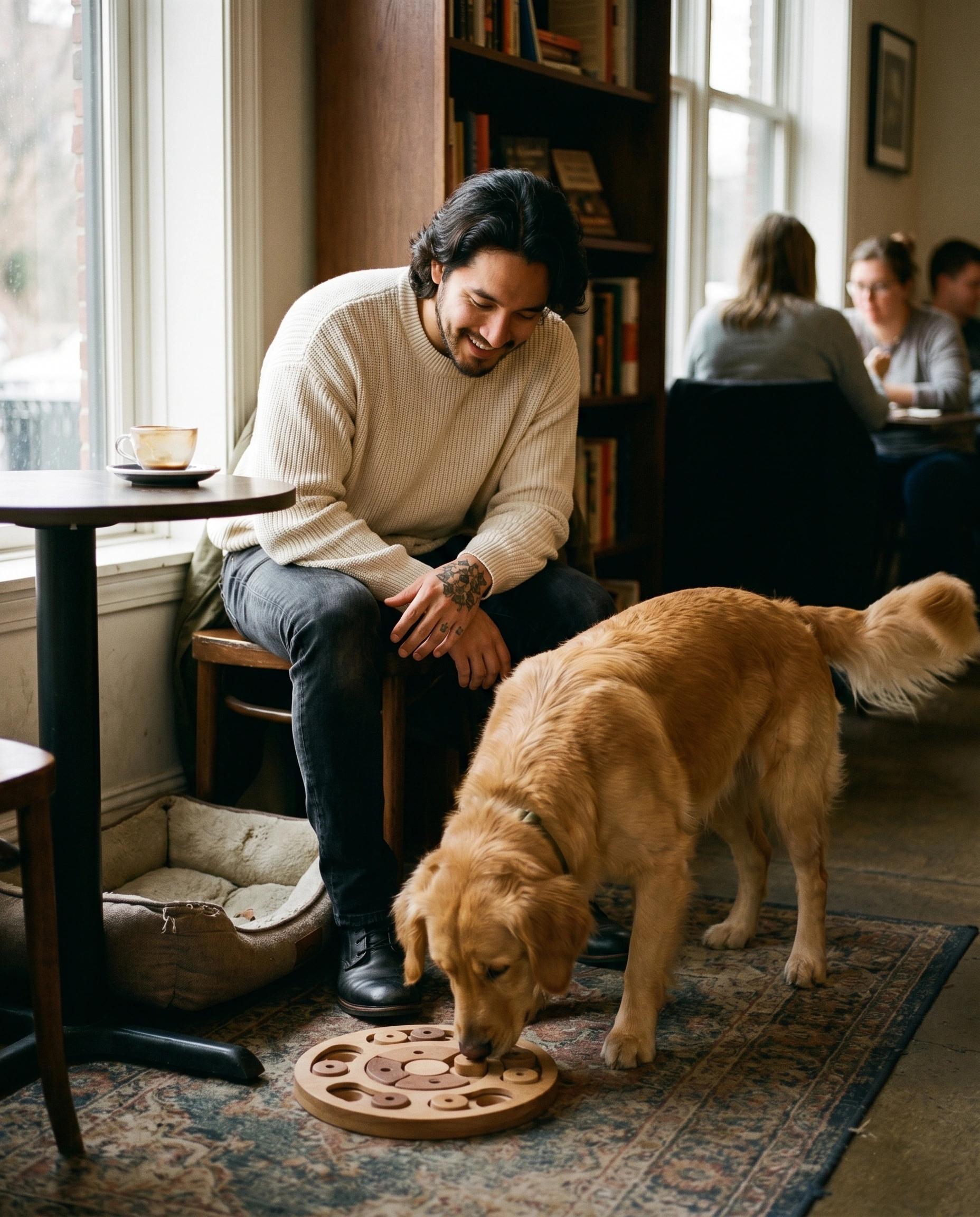
Most prompt-engineering advice is written for people generating one image. AI influencers are different. You are generating the same person across hundreds, sometimes thousands, of posts. Every drift in face, wardrobe, or vibe compounds. By post fifty the audience can tell something is off, even if they cannot articulate why.
This is a working guide to the prompt patterns that hold a persona steady at scale. None of it is theoretical. Everything below maps to a structure we run in production at AutoPersonas: identity, wardrobe, photography register, companions, voice, and a banned-vocabulary list. Each of these is a structured field with a small, finite vocabulary, not a freeform prose blob.
The "same prompt" trap
Here is the experiment that changes most people's intuition about diffusion models. Take a prompt like:
a 27-year-old fashion blogger in Paris, soft afternoon light,
medium-format film look
Run it five times. You get five different women. Different bone structure, different eyes, different smiles. They share a vibe, not an identity. The model is doing exactly what it was trained to do: produce a plausible image of some 27-year-old fashion blogger. There is no anchor pulling it toward a single specific face.
This is the foundational mistake. Treating the prompt as the source of truth for who the persona is.
A persona is not a sentence. It is a fixed point in identity space, plus a controlled vocabulary that describes everything around that fixed point: hair, clothing, photography style, mood, environment. The text prompt's job is to reference the fixed point and modulate the surroundings not to recreate the person from scratch each time.
If you take nothing else from this article: a text-only prompt cannot encode a specific human face. You need reference images, and you need everything else in the prompt to be a structured field rather than freeform prose.
Anatomy of a persistent persona prompt
When we build the image prompt for a generation slot, it goes through five layered fields, in this order:
- Identity fixed at character creation, never freeform later.
- Signifiers the small set of distinctive visual features that survive every shot.
- Wardrobe a named set chosen from a finite library.
- Photography register the global stylistic frame (editorial vs candid vs snapshot).
- Mood / scene context the only field that varies post-to-post.
A clean identity record looks like this:
- Age: 31
- Build: lean with gentle posture
- Ethnicity: Mexican-Japanese
- Subculture: outdoorsy dog-dad
- Signifiers: medium-length dark waves with a messy natural part, trimmed beard, small paw-print tattoo on inside of wrist
Notice what is not in there. No "handsome." No "rugged." No "stunning." Those words are noise they make the model lean harder into its glamour-prior, which is the opposite of what most personas need. Identity descriptions should read like a casting brief, not a flattering bio.
The before/after looks like this:
Before (prompt as bio):
A handsome 31-year-old dog dad with rugged good looks and a warm
smile, hiking in the woods with his loyal golden retriever, both
looking happy and adventurous.
After (structured identity + signifiers + scene):
[Reference: persona_reference_sheet]
31-year-old Mexican-Japanese man, lean build, gentle posture.
Medium-length dark wavy hair with a messy natural part. Trimmed
beard. Small paw-print tattoo on the inside of his right wrist.
Wearing the "Trail hike" set: technical grey softshell, black
hiking pants, trail runners, small daypack. Mid-step on a forest
path, leaning down toward Biscuit, his 3-year-old golden retriever,
who is investigating something just off the trail. Soft late-
afternoon light, hand-held framing, no posing.
The second prompt produces the same person across 200 generations. The first produces 200 different men who all happen to have dogs.
Reference images > text descriptions
Identity is the field where text fundamentally cannot do the work. No matter how detailed your description, two runs of the same paragraph will produce different faces. The fix is anchoring the generation to a small, fixed set of reference images — the core mechanism behind a consistent AI character generator.
In our pipeline every look is anchored by a single multi-view reference sheet: one image with four panels — front, side, back, and a face close-up — generated from the front identity anchor. One sheet, not four separate uploads. The front anchor is the source of truth; the other panels are derived from it so all views agree on the same face and build.
Why the panels matter:
- Front panel head-on, neutral expression, even lighting. This is the identity anchor everything else derives from.
- Side and back panels lock head shape, hairline, build, and posture so the persona holds up in profile and walking-away shots.
- Face close-up panel preserves fine facial geometry — the details that drift first — so emotion and expression render without changing who the person is.
Together the four panels lock the face and body under almost any pose and lighting.
Two practical rules:
Keep the anchor lighting boring. Reference images shot in dramatic golden-hour light teach the model that the persona's face has those colors and shadows baked in. You will then see those shadows show up indoors at midnight. Anchor under flat, neutral light. Save the drama for the scene prompt.
Reuse anchors for at least 100 posts before regenerating them. Every refresh of the anchor set is a chance for the persona to drift. If you must update, hold a face-similarity check between old and new anchors.
Photography register: editorial lifestyle vs candid documentary vs warm snapshot
This is the single field that most teams underinvest in, and the one that causes the most "I cannot put my finger on it but it looks fake" reactions. The model needs an explicit photographic frame, otherwise it defaults to magazine-cover styling, which is wildly wrong for most niches.
We expose four registers to choose from:
- editorial lifestyle
- candid documentary
- magazine editorial
- warm snapshot
When to use each:
Editorial lifestyle fashion, luxury, travel, beauty campaign shots. Posed but not stiff. Composition matters, light is intentional, the subject is aware of the camera. This is the default the model wants to give you for almost everything, which is precisely why most AI feeds look like ad campaigns instead of feeds.
Magazine editorial high-fashion, runway adjacent, agency book material. Use sparingly. Leans into stylized poses and dramatic light. Good for one-off "cover" shots, terrible as a default.
Candid documentary parenting, pets, wellness, anything where the audience needs to feel they are seeing a real moment. Subject is not looking at the camera, framing is loose, light is whatever was actually in the room. The cover image on this post is candid documentary register: a parent in soft window light, attention on her child, not on the lens.
Warm snapshot food, friends, casual lifestyle. Looks like a phone photo from a friend. Slight lens distortion is fine, focus is approximate, color is room-temperature, not graded.
The before/after on register is dramatic. Take a dog-walk scene, two prompts, only the register line differs:
Editorial lifestyle:
... editorial lifestyle photography, magazine-quality, soft
key light, posed but natural ...
You get a model in a sweater on a styled forest path staring tenderly into the middle distance with a perfectly groomed dog at heel. It looks like an ad for hiking boots.
Candid documentary:
... candid documentary photography, hand-held, no posing,
subject not aware of camera, available light only ...
You get a creator leaning down toward his dog, half his face out of frame, real moment. It reads as honest. People scroll past the first one. They stop on the second.
We learned this the painful way. Early companion-driven personas had "editorial" hardcoded as the global register. Even with the suffix prompt begging for warmth, the output kept returning stoic magazine-cover stares. Switching the niche default to candid documentary did more than the next fifty prompt tweaks combined.
Negative prompts that actually matter
Most negative-prompt lists you will find online are kitchen-sink junk: "ugly, deformed, low quality, bad anatomy, extra arms, watermark." These do almost nothing on modern models, and worse, they prime the model to think about the concept at all.
Useful negative prompts target specific failure modes you have actually observed in your generations. Ours, after twelve months of iteration, falls into three clusters.
Anatomy tells:
extra fingers, fused fingers, six fingers, deformed hand,
gibberish text, garbled writing
These are still the highest-yield negatives. Hands and any visible text are where the model fails most visibly.
Skin tells:
waxy skin, plastic skin, over-smoothed
Counter the porcelain-doll look that screams "AI generated." Pair with a positive skin-texture appendix on portrait crops:
visible pores, peach fuzz, subtle imperfections, fine lines,
natural oil in T-zone, real skin texture, not waxy, not plastic
Setting tells:
fictional analytics overlays on device screens,
invented product UI overlays, mock dashboard,
visible third-party brand logos on appliances or packaging,
laptop on a desk in a home scene,
cluttered desk with cables and mail,
steam rising from skin
These are the weird artifacts the model loves to invent. Fake app screens. Logos on every fridge. A laptop appearing in every "cozy at home" shot. Steam rising off a person who is not in a sauna. None of these are catastrophic on their own; collectively they are the set of small wrongnesses that make a feed feel uncanny.
One important caveat about negative prompts on Gemini-class models. They have no dedicated negative channel. Live test data showed that phrasing things as "no AI overlays" or "no AI-themed graphics" actually primed AI-themed UI to appear in device screens. Our list deliberately phrases the same restriction without the token "AI" anywhere. If your model lacks a true negative channel, audit your list for terms that double as concept-primes.
For caption generation we maintain a separate banned list: words like delve, tapestry, realm, vibrant, bustling, seamless, unleash; phrases like in today's fast-paced world, dive into, embark on a journey; the not X, but Y rhetorical template; em-dashes used as clause breaks. These are the LLM tells that are obvious to any reader who has spent a week on the internet in 2026. Every caption gets a regex pass that rejects and regenerates if any of them slip through.
Wardrobe consistency
After face, wardrobe is where personas drift most. "Black blazer" is not a stable concept across generations different lapels, different fit, different fabric. Your persona needs a finite, named wardrobe.
Each wardrobe entry should carry a name, description, category, list of occasions it fits, a flag for which one is the default, and a small list of keywords for the planner to match on. A typical entry:
- Name: Trail hike
- Description: technical grey softshell, black hiking pants, trail runners, small daypack, water bottle clipped on the bag
- Category: outerwear
- Occasions: trail hike, park walk, golden-hour outdoor
- Default: false
- Keywords: softshell, hiking pants, trail runners
Three rules that make wardrobe stick:
Name every set. A persona with five named wardrobe sets will stay more recognizable across 500 posts than one with infinite freeform variation. Naming is what lets the prompt builder say "wear the Trail hike set" and have the description block injected verbatim.
Mark exactly one default. The default set is what gets used when no occasion overrides it. Without a default, the planner has to invent something each time, and you are back to drift.
Vary by occasion, not by outfit. When the persona needs a new look for a new context a wedding, a hike, a date night add a new named set. Do not let the prompt invent a new outfit on the fly to fit the scene. If the wedding only happens once, the outfit can still be a one-off named set; what matters is that it exists in the library and can be referenced cleanly.
In practice this means roughly six to twelve named wardrobe sets per persona is the sweet spot. Fewer and the feed feels repetitive. More and you start to lose the visual through-line.
Companion characters
Pets and parenting niches have a specific failure mode: the secondary subject drifts even when the primary persona is locked. The dog changes breeds between posts. The kid changes ages. The audience notices.
We treat the companion as a first-class field on the persona. A typical pets companion record:
- Name: Biscuit
- Visual description: 3-year-old male golden retriever, medium-large (~65 lb), sandy-honey coat with slightly darker ears and a lighter chest blaze, soft wavy feathering on tail and legs, warm brown eyes. Always wears a worn olive-green nylon collar with a small silver bone-shaped tag.
- Personality: endlessly enthusiastic, tail never still, obsessed with tennis balls, will flop onto his back for belly rubs on sight.
The visual description gets pinned to the header of every prompt, not buried at the end:
NAMED COMPANION in this feed: Biscuit (he/him).
3-year-old male golden retriever, medium-large (~65 lb), sandy-
honey coat with slightly darker ears and a lighter chest blaze,
soft wavy feathering on tail and legs, warm brown eyes. Always
wears a worn olive-green nylon collar. The creator is this
companion's owner and they appear together in every post. Use
the name "Biscuit" naturally in captions. Avoid generic
substitutes like "my pup" or "the dog" those are the anti-
pattern.
A few details matter here. Pin the companion before identity, not after. The model anchors on whatever appears earliest in the prompt for entities that need to be stable. Use the actual name, not "the dog" the caption side will inherit the placeholder otherwise. And ban the generic substitutes ("my pup") explicitly, because LLMs love them and they are exactly the cliché that breaks the illusion of a real owner talking about their actual dog.
Caption-side prompting
Visual prompting and caption prompting are usually treated as separate problems. They should not be. The same persona logic that locks the face also locks the voice.
Caption-side fields we structure rather than leave to the LLM:
- Voice three or four adjectives ("warm, slightly self-deprecating, dry humor under stress").
- Tone bands what the voice sounds like across post types. Educational posts dial up clarity. Personal posts dial up vulnerability. Promotional posts dial down everything and lean on specificity.
- Quirks small, repeatable verbal tics. Always lowercase. Frequent parenthetical asides. Never uses exclamation points. Two of these is enough; five and the persona starts to feel performed.
- Catchphrases one or two short phrases that recur, sparingly, as a signature.
- Banned vocabulary the LLM-tell list. Non-negotiable.
The before/after for captions:
Before (freeform):
Write a caption for a photo of [persona] reading with her
toddler on a Saturday morning. Make it warm and authentic.
You get: In today's fast-paced world, taking a moment to slow down with my little one is everything. These quiet morning moments are pure magic ✨
After (structured):
Caption for the attached image. Voice: warm, dry, slightly
self-deprecating, observational. Quirks: always lowercase, no
exclamation points, occasional parentheticals. Tone band:
personal-reflective. Companion name: Biscuit (use the name,
not generic substitutes). Banned phrases (NEVER use): "in
today's fast-paced world", "embark on a journey", "dive into",
"my pup". No em-dashes. 2–3 short sentences. End on
something specific, not a generic CTA.
You get: biscuit found a tennis ball under the porch this morning. carried it inside like a trophy and refused to put it down for forty minutes (we have eleven of these somewhere already). this is what i mean when i say he picks the day's mood, not me.
The second one is unmistakably someone. The first one is no one.
Iteration loops without burning budget
Prompt iteration on a single image is cheap. Prompt iteration on a persona is expensive, because every change has to be tested across the full distribution of post types selfie, full-body, with-companion, low-light, daylight, indoors, outdoors. Burn through that distribution naively and a single tweak can cost a few hundred generations.
A loop that has saved us a lot of GPU time:
-
Pin a 5-prompt evaluation set. Pick five representative scenes the persona has to nail: morning selfie, full-body outdoor, candid with companion, evening warm-light interior, posed seasonal. Lock the prompts. Lock the seeds.
-
Generate the baseline once. One image per scene. This is your control.
-
Change exactly one field. One word in the global suffix. One swap of register. One added negative prompt. Not three at a time. The whole point is to attribute the result.
-
Regenerate the same five scenes with the same seeds. Now the only variable is your change. You can A/B the pair side by side.
-
Score on three axes, in this order: identity match (does it still look like the same person?), niche fit (does it look like the right kind of post?), aesthetic (do you want to look at it?). If identity match drops, the change is rejected regardless of how good the aesthetic got.
-
Keep a changelog. Note the prompt diff and the eval scores. After ten iterations you will have a pattern of what helps and what does not, and you will stop relitigating decisions.
The whole loop is five generations per change instead of fifty. Run it religiously and you can tune a persona in an afternoon instead of a week.
Where to go from here
The pattern underneath all of this is the same: the more of your prompt you can move out of freeform prose and into structured fields with a small finite vocabulary, the more stable the persona becomes. Identity, signifiers, wardrobe sets, photography register, voice, banned vocabulary every one of these is a typed field in our schema for a reason. Freeform prompts produce freeform people. Structured prompts produce a person.
If the visual side of consistency is the harder problem for you right now, our companion piece on the AI influencer visual consistency problem covers the four techniques (reference embedding, locked wardrobe DNA, environment LoRAs, post-generation QA) that pair with the prompt patterns above.
And if you want the whole thing schema, banned-phrase lists, photography registers, companion-locking running by default instead of building it from scratch, start a persona on AutoPersonas and you can be testing your first generation set in an hour.